Fight Club’s famous rules are far more complex than they first appeared. Some yielded fascinating results, and others reveal the Narrator’s identity.

Summary
- The iconic rules of Fight Club play a pivotal role in the movie, dictating the club's code of conduct and revealing the complexities of the main character's identity.
- The first rule of Fight Club, not to talk about it, reflects the irony that Tyler Durden is a figment of the Narrator's psyche, and breaking this rule would expose Tyler's true identity.
- The Fight Club rules demonstrate honor, sportsmanship, and the pursuit of enlightenment through violence, but many of these rules are broken by the main characters, showcasing their flaws and contradictions.
In one of Fight Club's most iconic scenes, Tyler Durden declares the titular underground Fight Club rules but doesn't totally go into what they mean. While these rules dictate the fighter's code of conduct, they also convey secondary meanings that concern the Narrator's true identity. Additionally, many of these rules are subsequently broken by Fight Club's principal characters, particularly when the club evolves into a domestic terrorist unit named Project Mayhem, intent on destroying modern consumerist society.
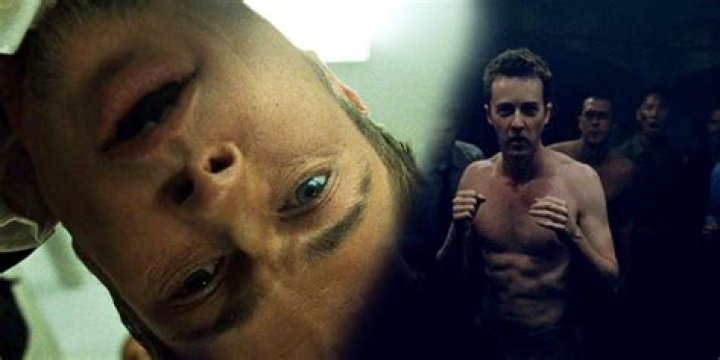
David Fincher's seminal Fight Club starred Edward Norton as the unnamed Narrator, who, discontented with his white-collar life, partners with enigmatic soap maker, Fight Club's Tyler Durden (played by Brad Pitt). The pair establish an underground fight club, for which Durden proclaims a set of eight fight club rules that members must obey. The scene is one of Fight Club's most memorable moments, with these rules playing a pivotal role throughout the movie and also revealing the complexities of the Narrator's identity.

Fight Club Ending Explained (In Detail)
Fight Club ends with one of cinema's most iconic twists, but even decades later, there's more to the somewhat ambiguous ending than meets the eye.1 You Do Not Talk About Fight Club

The first rule of Fight Club dictates that members must not discuss the club and should maintain the club's secretive nature. This is particularly ironic considering that Tyler Durden is a figment of the Narrator's psyche. In deciding rule one, Tyler/the Narrator is expressing concern over members speaking to other people, all while he is talking exclusively to himself and his second personality.
In fact, rule one's code of silence perpetuated many of Fight Club's complications, and the club echoes Tyler Durden himself in this manner. Tyler makes the Narrator promise not to talk about him to Marla (Helena Bonham Carter), mirroring the first of the Fight Club rules. If the Narrator had talked about Tyler (or Fight Club), to Marla or at one of his many support groups, Tyler's true identity would have been revealed much sooner.
2 You Do NOT Talk About Fight Club

The repetition of rule one is one of the most famous moments from Fight Club. As remarked on by Tyler, obviously certain members have broken rules one and two as the attendance has swelled considerably. As the club evolved into a political movement, talking about Fight Club became necessary, or at least their presence was repeatedly declared through highly public acts of domestic terrorism. Following the revelation that the Narrator is Tyler Durden, it becomes apparent that the new members the Narrator is jealous of, were actually recruited by the Narrator himself, who therefore broke Fight Club rules one and two.
3 If Someone Says "Stop" Or Goes Limp, Taps Out, The Fight Is Over
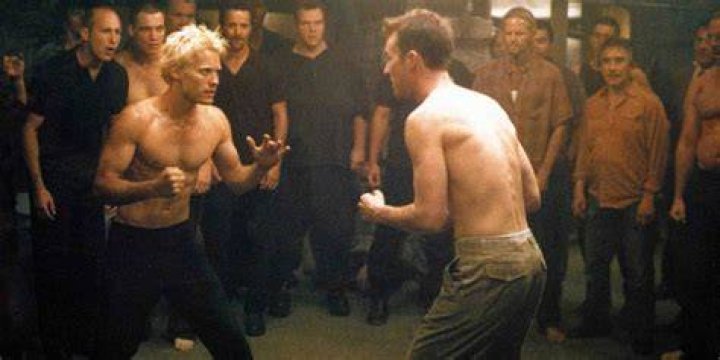
The third of the Fight Club rules states that a fight ends when a fighter decides so or is unable to continue. It infuses a sense of propriety to the violence and honor among the club members, which builds upon the proposition that there's some emotional wisdom or mental enlightenment available in the violence. Rule three is broken most notably by the Narrator himself when he brutally beats Angel Face (played by Jared Leto) long after he's limp because he "wanted to destroy something beautiful." Angel Face is ultimately maimed by the fight, and the club members observe their leader break another of his own rules.
4 Only Two Guys To A Fight

Rule four indicates that a fight will consist of only two people at a time, presumably to retain a sense of sportsmanship and fairness. It initially appears that the fourth of the Fight Club rules was inspired by the Narrator and Tyler's first fights in the parking lot, but this is of course not the case. Instead, it reflects the protagonist's two personalities, who are fighting for control of the Narrator's body throughout Fight Club.
The clarifier "guys" is important too, as Fight Club is a movie about male fragility and toxic masculinity. In fact, most of Fight Club is variations on two men in either conflict or dependence. The fighting in particular is contrasted against the opening scene, during which the Narrator embraces the weeping Bob (played in Fight Club by Meat Loaf). This furthers the potential homoerotic themes in Fight Club which many have proposed, and also maintains the concept of two men sharing enlightenment through extreme emotions.
5 One Fight At A Time
Rule five states that only one fight may occur at any given time. It appears this is a rule for safety, but it has an interesting effect. With only one fight at a time, all other club members are spectators. This ceremonial dynamic continues the notion that fighters are gleaming some deeper meaning from the fights and the process is somehow therapeutic or meditative. Rule five also reflects the protagonists' preoccupation with fighting throughout Fight Club, which completely dominates their lives. The fight club and Project Mayhem are initially dedicated to a singular project, but later, the group begins working on multiple projects and consequently begins to deteriorate.
Fight Club Soundtrack Guide: Every Song & When They Play
As a former music video director, the music in David Fincher films is always carefully selected and the choices for Fight Club are unique.6 No Shirts, No Shoes

The sixth of the Fight Club rules states that no shirts or shoes may be worn during a fight. Presumably, this is for safety reasons primarily, but it had other consequences for Fight Club. This rule, or more accurately the results of this rule, led to many homoerotic interpretations of Fight Club, which suggest sexual undertones to the man-on-man action. Moreover, rule six also sparked the most enduring image from Fight Club: the topless Tyler Durden in the early throes of a fight. Pitt's physique in this Fight Club scene became even more iconic than the second rule, and his image became a cultural phenomenon all of its own.
Additionally, making the protagonists topless allowed for further comparison between Tyler and the Narrator. In Fight Club, the Narrator points to an advertisement featuring a male model and asks if that was what men were supposed to look like. At first, it appears that the Narrator is oblivious to the fact that Tyler has a very similar physique, but once considering that Tyler is the Narrator's ideal version of himself, it becomes apparent that the Narrator is basing Tyler's body on this advert. Soon after the men begin removing their shirts and Pitt's body is another hint that he and the Narrator are one person, facilitated by rule six.
7 Fights Will Go On As Long As They Have To

Rule seven declares that fights will continue for "as long as they have to." The implication is that there is no upper time limit to a fight, and fighters can continue to brawl for as long as they wish (provided the previous rules are adhered to). The phrasing, "have to," again perpetuates the idea that there is some solace and serenity within the violence that the fighters must achieve by facing their pain, a common theme throughout Fight Club.
The seventh of the Fight Club rules also demonstrates the relentlessness of Project Mayhem in its attempts to shatter capitalist society. This is particularly evident when the Narrator is pursued by several club members who he doesn't recognize while traveling across the country. Fight Club's ending also demonstrates the fight for "as long as you have to," mentality: Tyler Durden and the club members will keep fighting until their ideology is realized, and even after defeating Tyler, the bombs will still detonate.
8 If This Is Your First Night At Fight Club, You Have To Fight

Fight Club's final rule implies that each member of Fight Club will have fought at least once. This places each member on equal footing, as they begin to reevaluate their worth as humans. It reflects the "embrace your pain" mentality depicted in the infamous chemical burn scene. Every member of Fight Club and Project Mayhem must first suffer and prove their worth in order to live according to Tyler's vision. Rule eight, like all of the Fight Club rules, has a very simple, safety-based premise within the narrative, but each also reveals further details that demonstrate the intricacy and brilliance of David Fincher's Fight Club.
The Fight Club Rules Are Its Most Iconic Aspect
Fight Club is inherently iconic, and there are so many props, musical cues, and phrases that audiences associate with the 1999 movie. Whether it's a bar of soap or The Pixies' "Where Is My Mind," almost anything can trigger people's memory of the cult classic. However, the Fight Club rules remain the most iconic aspect of the movie, and they have become cemented in pop culture. The Fight Club rules are been endlessly memed and quoted two decades later. Repeating the first rule as the second rule just to signify something's importance has become a common trend in workplaces and life in general, and that's thanks to Fight Club.