Peter Jackson's The Lord of the Rings trilogy utilizes many fantastic visual effects, one of the best being adult actors looking as small as Hobbits.
Here's how Peter Jackson made fully-grown actors appear like half-sized Hobbits in his The Lord of the Rings trilogy. Released between 2001 and 2003, the Lord of the Rings movies have stood the test of time and left a cinematic legacy that still resonates throughout the fantasy genre, both in film and on TV. Though much of the adulation concerns characterization, storytelling and a vivid interpretation of Tolkien's mythology, Jackson's The Lord of the Rings also represented a landmark achievement in the world of special effects.
The Two Towers' Battle of Helm's Deep broke new ground in terms of epic battle sequences, utilizing vast quantities of extras and CGI to give the impression of a colossal clash between orc and man. Even more impressive was the character of Gollum, with Andy Serkis' motion capture performance the first of its kind, paving the way for the likes of Caesar in Planet of the Apes and Thanos in Avengers: Infinity War. Entire films (The Jungle Book, for example) have even been based around technology first honed on The Lord of the Rings. But with the array of impressive computer-generated effects Middle-earth has to offer, it's easy to overlook the equally-astounding practical magic.
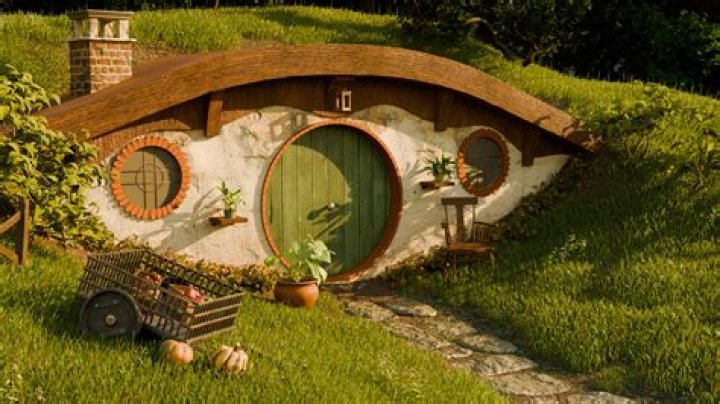
One of Peter Jackson's biggest challenges in The Lord of the Rings (and there were a fair few) was to create the Hobbits. These beings were not children, but were a fraction of an adult human's size. With the Hobbits' height one of their defining features and a key part in creating their underdog status, Jackson was forced to find a way the Hobbit contingent of his cast could look smaller than the rest. For the Lord of the Rings trilogy, this effect was entirely practical. Jackson used traditional forced perspective to create the illusion of one actor being smaller than the other. This included different sized props (chairs, mugs, etc.) and carefully positioning a character such as Frodo in relation to another of regular stature, giving the impression that two similarly-sized actors were actually of vastly differing heights.
Click here to watch 10 Scenes That Were Almost Impossible To Film on YouTube.
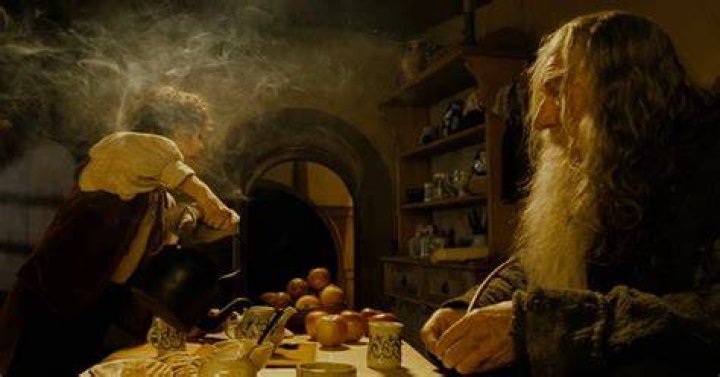
Because forced perspective usually relies on very specific camera angles, The Lord of the Rings utilized moving sets that would shift in sync with the camera, maintaining the same sense of perspective throughout the shot. In scenes where Hobbits didn't necessarily need to interact directly with bigger characters, the Hobbits would be filmed separately, with everything pieced together later in post-production.
Both methods were painstaking and time-consuming processes, requiring either double-length filming sessions or the construction of an intricate and carefully maneuvered set. As such, Jackson changed approach for his The Hobbit trilogy, incorporating a little CGI into the mix. For the prequel series, Peter Jackson moved away from filming the Hobbits' scenes separately, and would instead film simultaneously on two separate sets. A character of one size would shoot on the principal set, while their bigger/smaller counterparts would film a few feet away on a green screen set, with cameras programmed to mimic each other. With the scene playing out in real-time, Jackson could direct performances far easier, and the actor shooting on green screen would then be digitally inserted into the footage from the main set.
Without question, the Hobbit visual effects in The Lord of the Rings are seamless, and provide expert examples of forced perspective in filmmaking. It's understandable that Jackson might want a quicker solution when working on The Hobbit - the movies were already rushed to strict deadlines and halfling characters were even more prevalent than they were in The Lord of the Rings. However, the difference in method can be subtly felt between the two trilogies. Where The Lord of the Rings feels earthy and home-grown, there's a digital sheen to the Hobbit movies that betrays the increased use of digital effects. Nevertheless, both methods yield fantastic results, and will be remembered as prime examples of their craft.
More: Everything Christopher Tolkien, JRR's Son, Did For Lord of the Rings