The Guilty, starring Jake Gyllenhaal, is a remake of a Danish film that is based on real elements of true crimes and the people involved in them.
Watching Jake Gyllenhaal’s The Guilty, it is not hard to believe that the dark thriller could be based on a true story. Set to the backdrop of the California wildfires and with a subplot involving police brutality, The Guilty's story holds a certain sense of veracity, but how much of the film is true? As The Guilty is a remake of the 2018 Danish film Den Skyldige, one would need to trace the story back to its source to find the truth.
Though the subplot of The Guilty's main character, Joe Baylor (played by crime-movie star, Jake Gyllenhaal) involves an episode of police brutality that is not in the original Danish film, both films focus on a call-center operator becoming involved with a kidnapping. Throughout The Guilty, Joe seems on the brink of a mental breakdown, and while his character and the others in the film are not specifically based on real people, Joe’s stress and sense of helplessness in The Guilty are likely true effects of the job. In this sense, at least, The Guilty is very much based on reality.
Beyond this aspect, however, Den Skyldige, the original Danish thriller movie that forms the basis for The Guilty's gripping crime storyline, is actually based on some other real-life sources. Though the exact story isn't true, Den Skyldige takes lots of inspiration from true crime footage and podcasts. Here's how The Guilty's story emulates these aspects of real life, too.
The Guilty Was Inspired By Real Crime Footage

Director and co-writer of Den Skyldige, Gustav Möller, claims that the inspiration for his film came from listening to real crime footage. Before making the film, Möller was inspired by a real 911 emergency call and the true-crime podcast, Serial. So, while the exact happenings of the plot and the characters are fictional, both Den Skyldige and its remake, The Guilty, are based on real elements from real crimes.
In The Guilty, the plot twists follow Joe as he tracks a kidnapped woman, Emily (played by Riley Keough). Trapped in a vehicle with her kidnapper, Emily works to communicate her situation and location to Joe, all while pretending that she is speaking to her young daughter Abby. This scenario was taken directly from a real, 20-minute 911 call that Möller listened to on YouTube in which the caller spoke in code. Adding to this already thrilling element from the original film, The Guilty has the kidnapping take place during the very real California wildfires, further rooting the film in true events. In an interview (via Variety), director Antoine Fuqua (who directed The Guilty from a van) says the fires were a nod to Dante’s Inferno and the idea that Joe’s character is in a kind of purgatory during the film.
Möller has also pointed toward a podcast, Serial, as inspiration for Den Skyldige. In an interview (via CNET), Möller says, “What I felt listening to Serial was for every episode of that show my images of these people and locations will change, because I'll get new information about the suspect and the victim." This is certainly the case in The Guilty, a film set entirely in one location with phone calls as the primary source of information. With each phone call Joe makes and receives with Emily, her husband Henry, and their daughter Abby, new information is revealed and the characters change. This leads to the film's huge reveal—a twist that certainly makes one thankful that The Guilty's ending is not actually true.
Was Joe Baylor A Real Person?
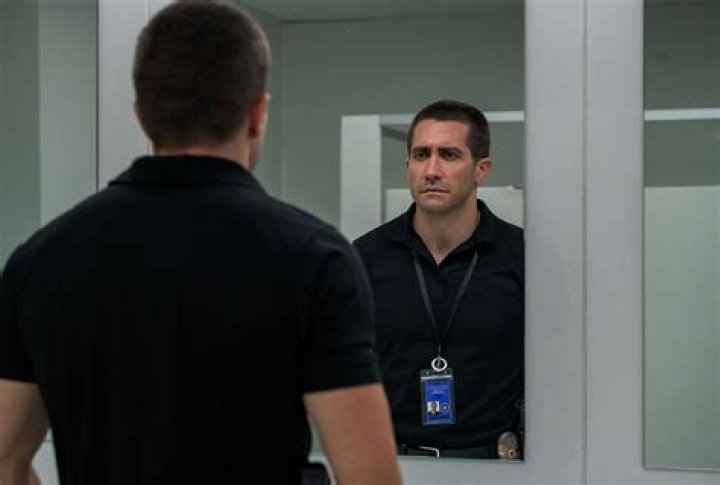
Despite the realism Jake Gyllenhaal brings to the role with his strong performance, The Guilty's Joe Baylor is not a real person or based on a real person. Even Den Skyldige doesn't have a character that directly corresponds to Joe. Rather, all of the characters in The Guilty, and in its Danish original, are totally fictionalized, being only loosely based on the real crimes Möller found interesting from the podcast. But while Joe Baylor isn't a real person, his role in The Guilty still makes for a gripping and surprising story based on true events.
Avoiding the inclusion of a real person in Joe's place would rob the movie of its ability to pick and choose different crimes from various interesting corners of the source material. By referring to true crime for its narrative, The Guilty owes the victims involved a level of dignity, and having Joe as a cipher for the audience allows viewers to react in his shoes without introducing inaccuracies or framing the movie too starkly as a reenactment.