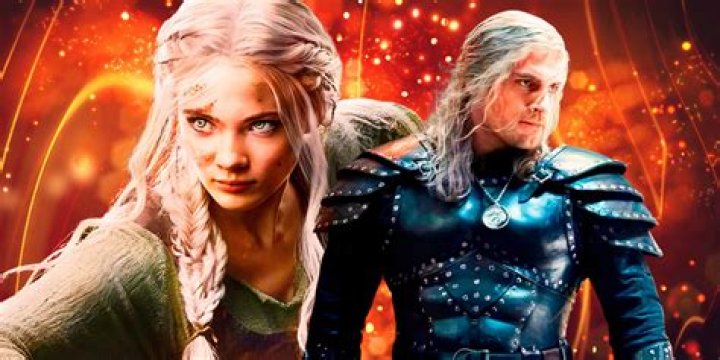
The Witcher’s monoliths have been revealed to be pathways to different realms. Beyond this, the monoliths’ true purpose can only be unlocked by Ciri.
Warning: the following contains SPOILERS for The Witcher.
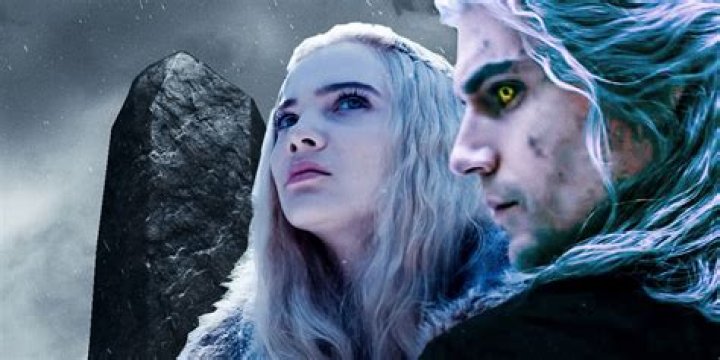
The Witcher’s monoliths are huge black pillars of stone that appeared across the Continent after the Conjunction of the Spheres, over a thousand years before the events in the series. No such monoliths exist in the short stories and books by Andrzej Sapkowski, on which the games and Netflix series are based. The writers of the series have also actively avoided becoming "an adaptation of an adaptation" by lifting elements only from the books and not the games. This is why it’s interesting that the monoliths in the series are preceded not by the novels but by an in-game quest.
In The Witcher games, much smaller monoliths are scattered across the map in the shape of the Sefirot, which originates from the Jewish esoteric discipline of Kabbalah. Later, it’s revealed that these monoliths are the key to opening an abandoned mage’s tower – rumored to be a cursed place for breeding monsters. This echoes how the series’ much larger monoliths function as pathways for different entities between realms.
The Witcher season 2, episode 5, “Turn Your Back,” reveals that according to the Continent’s historians, the monoliths could be leftover points of impact from the Conjunction of the Spheres. Moreover, the monoliths are scattered across the Continent in places like Cintra, Kaer Morhen, Nazair, and more – but not in any recognizable shape like the monoliths in the games. There’s also the fact that the monoliths are apparently made of a unique mineral known as stellacite, which exhibits otherworldly durability. Together, these different facts about the monoliths in The Witcher paint a clearer picture of the true purpose behind these intimidating magical obelisks.
What Monoliths Are Made Of & Why They Can't Easily Be Broken

According to sorcerer and archeologist Istredd (Royce Pierreson), stellacite is so tough that it actually takes centuries before showing any subtle signs of natural erosion from the elements. As Istredd explains in The Witcher season 2, episode 5, “Turn Your Back,” the sudden destruction of the monolith outside Cintra (which was caused by Ciri’s (Freya Allen) scream in the series pilot) is a scientific revelation that defies every historical precedent regarding the monoliths. Based on how both Triss (Anne Shaffer) and Geralt (Henry Cavill) are familiar with stellacite, it seems to be common knowledge, at least among magic users, that this unique black mineral is what primarily comprises the monoliths across the Continent.
During The Witcher season 2, episode 4, “Redanian Intelligence,” Triss and Geralt are in the laboratory at Kaer Morhen when they find stellacite inside the leshy and the myriapod that attacked the witcher Eskel (Basil Eidenbenz) and tried to get Ciri. Touching the stellacite causes Ciri to get visions of a strange desert in an alien world, wherein an entity that is likely to be the Deathless Mother – also known as Voleth Meir – assumes Ciri’s form and tells her, "Daughter of Chaos belongs to us. Turn your backs. Join the procession. There is only death here."
In short, stellacite might be indestructible to forces from within the Continent because it comes from a different realm. Moreover, the visions that Ciri gets when she touches the stellacite and how Ciri’s Elder blood gene enables her to either destroy or somehow tap into the monoliths’ power suggests that the origins of Ciri’s destiny could be alien as well. It all comes back to the Conjunction of the Spheres.
Monoliths' Connection To The Conjunction Of The Spheres
The Conjunction is a cosmic event in which the Continent’s Elder races of elves and dwarves were joined by men and monsters from other worlds, monoliths appeared across the land, and the forces of Chaos and magic became much more prolific in the Continent. Istredd believes that the monoliths are likely to be the conduits of power that enabled the Conjunction, a theory supported by how the fall of Cintra’s monolith coincided with the strange vibrations emitted by the monolith at Nazair.
This hypothesis is further supported by how Ciri (Freya Allan), under the influence of the Deathless Mother or Voleth Meir of the Wild Hunt, uses the monolith at Kaer Morhen to transport herself, Geralt, and Yennefer (Anya Chalotra) to an unknown realm in The Witcher season 2, episode 8, “Family.” All this implies that the power which resides within Ciri’s Elder blood, when channeled through the monoliths, could result in another event similar to the Conjunction. In turn, this could shine a light on what Voleth Meir and the rest of the Wild Hunt has in store for not just the Continent but the entire multiverse.
What The Monoliths Have To Do With Ciri’s Destiny, Ithlinne’s Prophecy, And The Wild Hunt
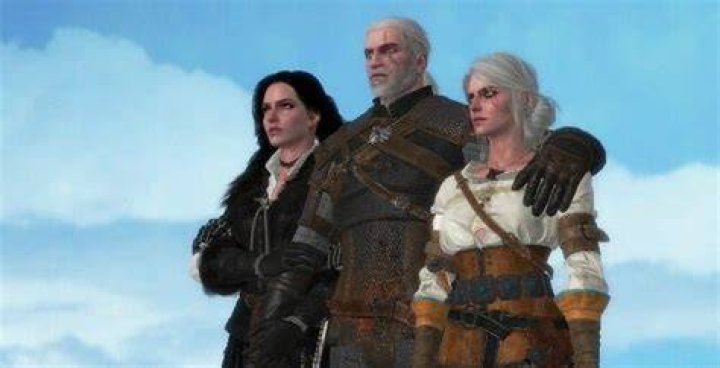
It seems that Ciri’s emotional reactions are the only ways to somehow affect or interact with the stellacite monoliths. This implies that, in the end, the fate of the monoliths – and possibly the multiverse – will be left for Ciri’s true emotions to decide. For now, there seem to be two main paths available to Ciri.
As the ending of The Witcher season 2 reveals, the Wild Hunt wants to recruit Ciri because she is the Daughter of Chaos, the only entity that can allow them to use the monoliths for traveling and sowing death and destruction across the realms. In the books and games, the riders of the Wild Hunt are Aen Elle, a race of elves that come from the city of Tir ná Lia, which is located in a realm outside the Continent. The Aen Elle did not create Tir ná Lia. Rather, they conquered it from the humans who built and lived in the city and then used its “Gate of the Worlds” to take human slaves from other realms and establish their own civilization. The Conjunction put the Aen Elle’s plans to a halt, but Ciri could restart it.
On the other hand, there’s also Ithlinne’s prophecy or Aen Ithlinnespeath, which identifies Ciri – the Child of Elder Blood – as the salvation of the elves in the Continent. This could mean that Ciri will choose to destroy the monoliths in the end, thwarting the Wild Hunt’s plans. Ciri’s power over the monoliths might even hold the key to the reversal of the Conjunction, which would essentially banish humans and monsters from the Continent and allow the elves to resume control, thereby fulfilling Ithlinne’s prophetic visions. That being said, both the Wild Hunt’s plans and Ithlinne’s prophecy are not only elven in origin but also similarly spell doom for humans, which means that their respective outcomes could ultimately be the same.
Monoliths In The Witcher Season 3 & Beyond
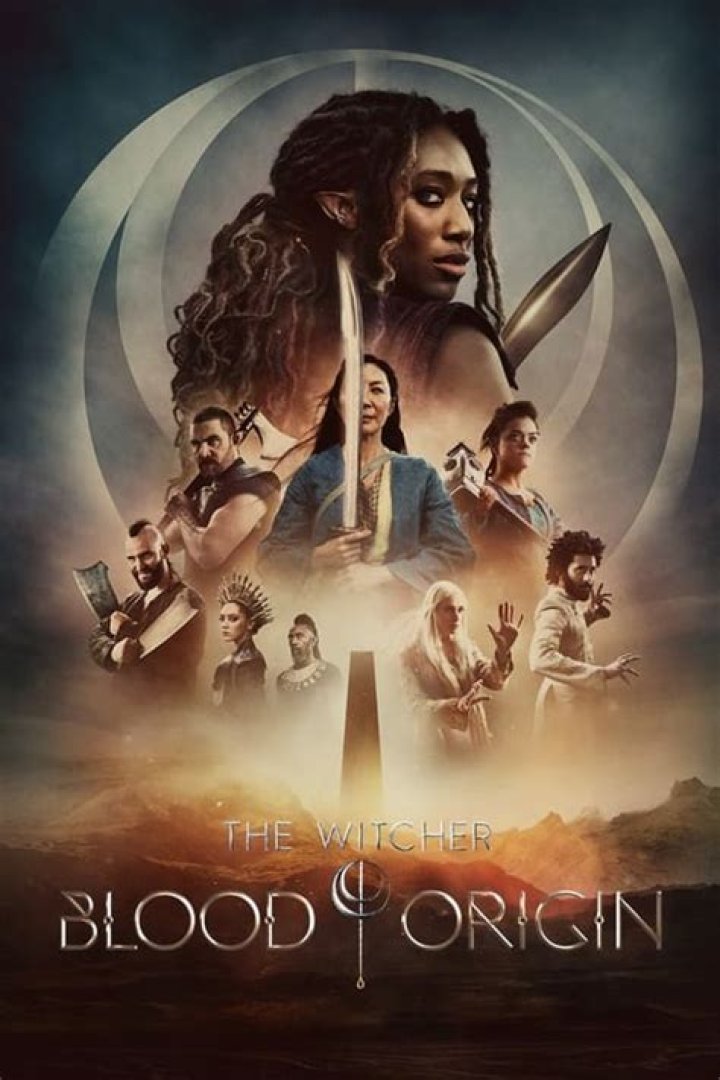
Netflix’s The Witcher has been known to divert from the books and games, as evidenced by the existence of the monoliths, to keep long-time fans guessing. This means that, although the abovementioned outcomes for the monoliths make sense in terms of The Witcher’s larger lore, The Witcher season 3 could result in entirely different events. Moreover, as the upcoming series The Witcher: Blood Origin will tackle the story of the elves before the Conjunction, the arrival of humans and monsters, and the creation of the first witcher, more is bound to be revealed about the origins of the mysterious monoliths.
More: Witcher Universe Trailer Breakdown: 11 Reveals About S2, Blood Origin & More